Subscriber question:
"Might AI be the answer to finally eliminating accidental gear-up landings?" —Luc B.
Not subscribed yet? Sign up here to receive tips like this every week.
Bruce:
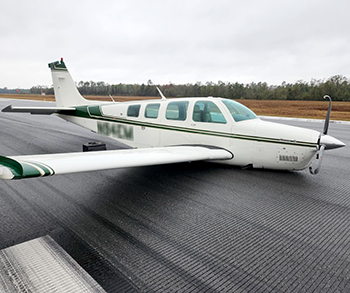 “AI connected to a GPS navigator might eventually help reduce the number of gear-up incidents. It could know that you’re on final to a runway, check that the landing gear is down, and announce ‘Check landing gear’—not just beep—if the wheels aren’t down.
But that’s not the reality today. Distractions and last-minute changes to normal operations still lead the list of causes of gear-up landings. I asked an AI agent if it had any brilliant solutions. Alas, it basically repeated long-standing recommendations, emphasizing the need for standard procedures, using checklists, and knowing how your airplane performs gear-up versus gear-down as you descend. And, most importantly, a visual and verbal confirmation on short final that the gear are down.
That last item is still your best insurance—especially when something disrupts your standard traffic pattern or approach routines. You may not fly a downwind or base leg, but you always must line up with the runway. When I’m instructing, I require pilots to verify the landing gear indications and call out ‘gear down’ or ‘three green, no red’ on final. I don’t understand why so many pilots haven’t made that a standard practice.
You can develop and use a final check and callout even if you fly a fixed-gear airplane. As you line up on final, note the wind and confirm and announce that you’re on the extended centerline, with flaps set, stable at the correct approach speed with the power at a normal setting, and on the proper descent path to the touchdown zone. Checking the landing gear is a natural extension (ahem) of that procedure when you start flying retracts.
But if AI eventually provides a last check, confirming that the landing gear are down will remain the best way to avoid a costly—and embarrassing—truly short-field landing.”
Do you have a final pre-landing flow you always do on final?