Subscriber question:
"I know I shouldn't 'save' a landing, but sometimes a bounce can be fixed with a small adjustment that yields a smooth touchdown. Is there some simple guidance on this?" — Thomas H.
Not subscribed yet? Sign up here to receive tips like this every week.
Tom: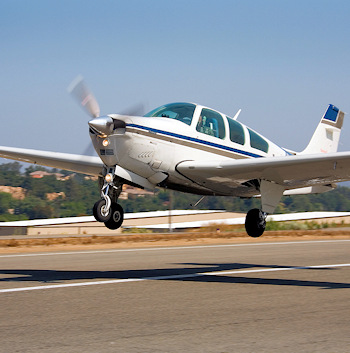
“I teach what I call the ‘one bounce rule,’ which means you can try to correct the bounced landing only once. To be clear: You might need to go around after the first bounce. But in all cases, if the airplane bounces a second time, always go around. Risk increases with each bounce.
Bouncing can result from touching down with too much vertical speed. The landing gear flexes and throws the airplane back into the air. A bounce can also be the outcome of contacting the ground with too much forward speed. The airplane can skip back into the air if the wing is not stalled at touchdown.
One outcome from a bounce is an airplane that’s airborne without sufficient energy to flare and the second impact is much harder. Another common mistake is the pilot making corrections too slowly, entering a pilot-induced oscillation that magnifies each error until control is lost or the landing gear is damaged. A third bounce outcome is a recovery that results in such a long landing that the airplane goes off the end of the runway. A fourth is a go-around so late the airplane collides with an obstacle while trying to climb away. If you’re in danger of any of these after the first bounce, go around without a second attempt.
Bouncing happens to everyone every now and then. You can minimize how often it happens to you with good approach technique. Aim to be precisely on speed, on glidepath to the touchdown spot, aligned with the runway with the centerline stripe between your main wheels, and with no sideways drift. If you’re off on one or more of these variables—or even if you have final approach nailed, but a gust of wind upsets the balance—the airplane may bounce.
Landing an airplane smoothly at the planned touchdown spot requires every bit of judgment and precision a pilot has. No matter how well your last landing went, you have to work just as hard at it next time.”
Check out this video of recovering from a bounced landing.
What do you think is the most common cause of "the bounce"?