Subscriber question:
When ATC asks me for my speed, how should I respond? Indicated airspeed or groundspeed, and in miles per hour or knots? — Cecil G.
Not subscribed yet? Sign up here to receive tips like this every week.
John:
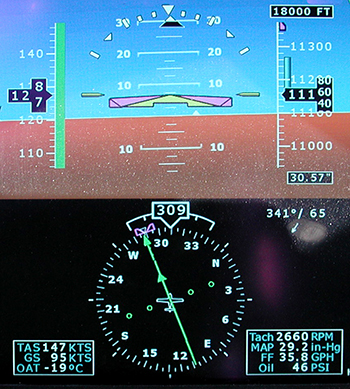 “There are many kinds of speed: indicated airspeed (IAS), calibrated airspeed (CAS), true airspeed (TAS), groundspeed (GS), and even Mach number. Each value has significance to pilots.
But there’s only one speed that the controller is interested in: Indicated Airspeed in knots.
That is because the controller is sequencing airplanes in the same air mass. Every aircraft is subject to the same effects of wind and density altitude. It’s the relative speed difference that the controller needs to sequence aircraft. So don’t try to compensate for altitude or temperature or wind.
Indicated airspeed is what we read on the airspeed indicator. In many older airplanes built before the mid ‘70s, the airspeed indicator may be marked in miles per hour. In this case, you’ll have to do a quick conversion to give the controller the speed in knots. Some indicators have an inner ring marked in knots.
But if your passenger asks how fast you’re going, feel free to pick true airspeed, which is higher, or groundspeed if you’ve got a great tailwind. And round up to mph. We all like to brag a little about our speed.”
Do you agree with the following statement? "The only speeds light aircraft pilots need to know are indicated airspeed and groundspeed."