
Subscriber question:
"I have a hard time judging my height above the runway and when to flare. Do you have any tips or technique that can help?" - Peter T.
Not subscribed yet? Sign up here to receive tips like this every week.
Tom:
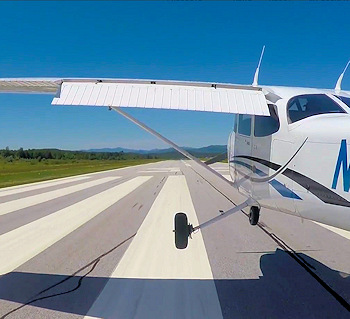 “Landing uses every skill we practice, including airspeed and angle of attack control, rudder input, and all-around hand-eye coordination. One of the hardest things to learn, because it happens so fast and for such a fleeting moment, is to judge your height above the ground.
I’ve found in my own experience and while teaching others, that it’s easier to judge my height and therefore how and when to flare the airplane by focusing toward the far end of the runway. As you cross the runway threshold, look toward the horizon. The runway’s end will appear to merge with the horizon line, and when it does begin easing back on the elevator to keep it that way. If the end of the runway appears to be broadening, getting wider, add some back pressure to keep it looking about the same. If the runway appears to narrow, release some back pressure because you’re getting too high. In a perfect world, once you’re over the runway you’ll be gradually increasing your pull on the controls until the mains touch in a nose-high attitude in a tricycle-gear airplane, or the airplane touches down in a three-point stance in a taildragger.
Here’s an exercise that I’ve found helps if you have trouble getting the sight picture of your height above the runway. With an instructor to help you avoid mistakes, as you begin your flare add power to fly the length of the runway at minimum controllable airspeed a few feet above the runway. Power up and go around when you’re about 2/3 of the way down the runway, so you’ll easily clear any obstacles.
Do this two or three times and you’ll have a much better idea of what it looks like during the fleeting moments of your flare. And that makes it easier for you to judge your height above the runway.”
Relative to flaring—which of the following do you struggle with most?