Subscriber question:
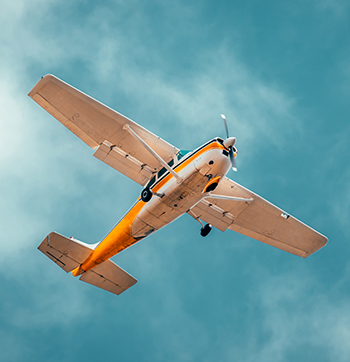
"My instructor insists I say, ‘Yellow Cessna left downwind’ instead of ‘Cessna 23N, left downwind.’ But it seems like most people use callsigns on CTAF. Which should I do?” — Moses A.
Katrina:
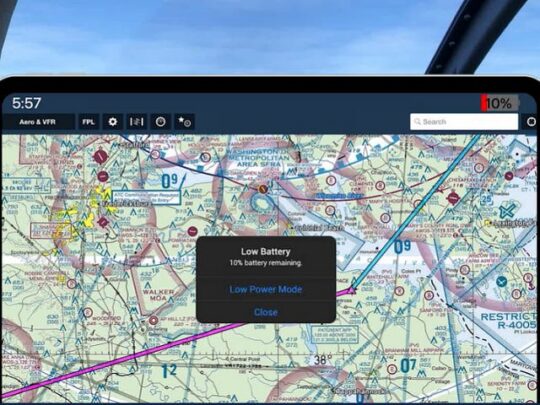
“I would have agreed with your instructor back in 2010. The advent of ADS-B combined with traffic information in the cockpit has made the callsign much more useful. The reason is simple: You can correlate the callsigns you’re hearing with what your traffic map shows. This creates a more complete picture of traffic around the airport.
No one should be heads-down, eyes glued to their map, while within 10 miles of the airport. Nothing substitutes for see-and-avoid. However, a quick glance to the top-down view of traffic on a map lets you build a faster, more accurate, picture of the traffic, including where you’ll fit in.
The AIM provides examples of recommended phraseology in 4-1-9. All of the examples provide an aircraft type and callsign. The Advisory Circular for Non-Towered Airport Flight Operations (AC 90-66B), which is much more explicit, says your transmissions may ‘include aircraft type to aid in identification and detection, but should not use paint schemes or color descriptions to replace the use of the aircraft call sign.’
Traffic patterns are by nature, as one of my first radar trainers phrased it, ‘a target-rich environment.’ Proper self-announce procedures, including type along with callsign, are vital to our safety near airports.”
Do you use your aircraft type and callsign or a description when making CTAF position reports?