Subscriber question:
"I was taxiing out and saw some deer by the side of the runway. Is there anything I can do to make sure I don't hit one with the airplane?" —Geoff G.
Jeff:
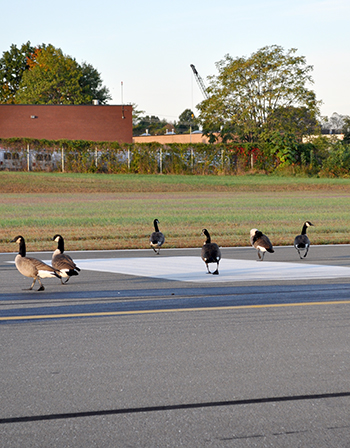 “Fall is the time to be extra careful about deer, but even small animals can cause big damage. A single jackrabbit took out the engine of a 737 departing Denver, CO. And a bunch of geese rather famously took out both engines of an Airbus departing LaGuardia in NYC. About 50 deer strikes are reported each year in the CONUS; estimates say the real number is closer to 250. All wildlife strikes total about 10,000 a year, if you include bird strikes. There’s apparently one alligator strike per year in the U.S., as well.
But back to deer.
I can offer three bits to mitigate the risk, at least a bit. One is research. The Chart Supplement and other information sources may note deer activity for the airport. Obviously, a grass runway is suspect. But deer love the border between trees for cover and open areas with forageable scrub. So what they really like is the margin between trees and runway, whether the runway is paved or not. Any airport with cover, like trees, near a runway could be a deer risk. Don’t count on fences, either. Deer can jump over an 8-foot fence with even just a small running start.
The second part is planning. Deer are crepuscular (I just wanted to say that word), meaning they’re most active at dusk and dawn. If possible, don’t arrive or depart airports with potential deer activity during these hours. If you must use the airport, a moderate-speed taxi full length and back before takeoff, or a low pass, might give a heads-up to animals and might scare them off. Maybe. Experience helps your eyes note suspect shapes, even when they’re stationary. Hunters learn this skill, but it takes practice.
The last part is being ready. Be ready to go around, with an emphasis on the pitch up to get over something. But also be ready to feel the thud and then—just land. Even the FAA notes that if you think the airplane is significantly damaged—vibration, poor controllability, compromised cabin (like broken windows)—you may be better off just putting the plane back down on the ground instead of taking the problem into the air.
If you do end up airborne with a compromised airplane, don’t overthink it. Don’t ask for a low pass so Tower can see if your gear looks bent. Don’t fly past good airports to one with a service center. Don’t use the autopilot if controllability is an issue. Do find an airport with a runway into the wind, and fire and rescue, even with just a potential gear problem. Consider a long runway if you have any concerns about extending flaps.
Also, consider committing to the landing rather than going around, even if it means going off the end or the side of the runway. A lot can go wrong with a major power change and reconfiguration. Broken parts may not stay attached. I have a friend whose Citation took a goose to the left flap on short final. The airplane shed that flap on the runway.
Animal strikes can happen. And even a bug strike to the pitot tube inlet can cause panic if you’re not prepared.”
Have you ever hit an animal with your aircraft?