
Subscriber question:
"When on a cross country trip, and you see a restricted area that you missed in your planning, what's the best way to find out whether to go thru or not?" - Doug D.
Not subscribed yet? Sign up here to receive tips like this every week.
Bob:
“The Aeronautical Information Manual, or AIM, will get us started on our answer.
Having reviewed the AIM, I have two recommendations that will keep you covered:
1. If you are on an Instrument flight, ATC will keep you out of trouble.
2. Even if VFR, using flight following will allow ATC to help keep you out of trouble.
Restricted area information is available on the bottom legend of your sectional chart and will provide all relevant information on the restricted airspace.

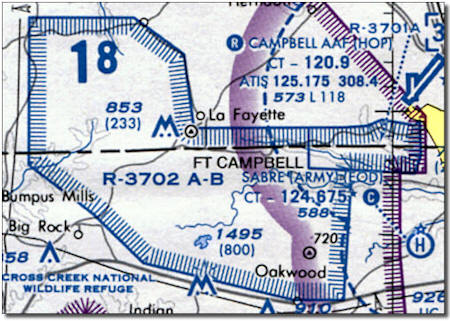
The Aeronautical Information Manual (AIM) Chapter 3-4-3:
a. Restricted areas contain airspace identified by an area on the surface of the earth within which the flight of an aircraft, while not wholly prohibited, is subject to restrictions. Activities within these areas must be confined because of their nature or limitations imposed upon aircraft operations that are not a part of those activities or both.
Restricted areas denote the existence of unusual, often invisible, hazards to aircraft such as artillery firing, aerial gunnery, or guided missiles. Penetration of restricted areas without authorization from the using or controlling agency may be extremely hazardous to the aircraft and its occupants.
b. ATC facilities apply the following procedures when aircraft are operating on an IFR clearance (including those cleared by ATC to maintain VFR-on-top) via a route which lies within joint-use restricted airspace.
1. If the restricted area is not active and has been released to the controlling agency (FAA), the ATC facility will allow the aircraft to operate in the restricted airspace without issuing specific clearance for it to do so.
2. If the restricted area is active and has not been released to the controlling agency (FAA), the ATC facility will issue a clearance which will ensure the aircraft avoids the restricted airspace unless it is on an approved altitude reservation mission or has obtained its own permission to operate in the airspace and so informs the controlling facility.
The above apply only to joint-use restricted airspace and not to prohibited and non joint-use airspace.
c. Restricted airspace is depicted on the en route chart appropriate for use at the altitude or flight level being flown. For joint-use restricted areas, the name of the controlling agency is shown on these charts.”