Subscriber question:
"Tell us more about contact approaches. When are they useful? When should they be avoided?" - Stephen H.
Not subscribed yet? Sign up here to receive tips like this every week.
John:
A contact approach is an IFR Approach to an airport that does not require flying a specific procedure. Several conditions must be met for a contact approach:
– The pilot must request a contact approach.
– The controller cannot initiate a contact approach.
– The airport must have a published instrument approach.
– The pilot must remain clear of clouds, have at least one mile
flight visibility, and reasonably expect to continue to the destination
airport in those conditions.
 The pilot assumes responsibility for obstruction clearance while conducting a contact approach.
Given all that, a contact approach can be a very useful tool in certain situations. How would this work in the real world?
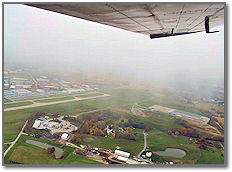
Suppose you are being vectored for an instrument approach and sight the airport through breaks in the clouds. All of the conditions above are met. Instead of going all the way out and executing a full procedure, you can turn towards the airport; saving flying miles and time. Or there may be a local weather issue, such as a fog bank over one end of the airport that might make an instrument approach unsuccessful.
A contact approach is not without risks however. Once you are cleared for a contact approach, all navigation and terrain clearance is on the pilot. If you lose sight of the airport or fly into a cloud, there is no missed approach and no terrain clearance provided.
If you do accept a contact approach be certain you can complete the approach or have a really good Plan “B”.