
Subscriber question:
"My emergency checklist for electrical fire in flight includes ‘Fire Extinguisher ... Activate.’ What’s the best way to do that?" —James P.
Not subscribed yet? Sign up here to receive tips like this every week.
David:
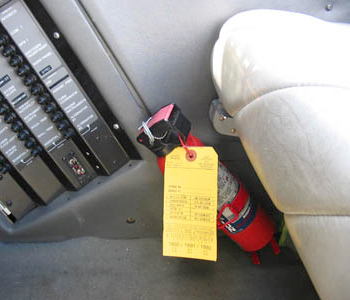 “Good question. Fire Extinguishers don’t get the respect they deserve. After a fire has started, it is way too late for learning how to use the extinguisher. Like most things in aviation, knowledge and practice is essential.
You probably know where the extinguisher is, but have you practiced unclipping it and removing it from its holder? This may require you to move your seat or an adjacent seat. That’s something you don’t want to be fumbling with if the cockpit is starting to fill with smoke. Make sure you can get it out—easily—or permanently move it to a better location.
Has the extinguisher been serviced within the last year? Does the gauge show in the green, with the pin secured, with a breakable safety tie? Do you know if it’s Halon, Dry Chemical, or CO2? Each type means different effects and hazards. Discharging a Halon or CO2 extinguisher will displace Oxygen in confined spaces, which can lead to asphyxiation, while dry chemical powder can create a dense white cloud that will restrict visibility and irritate eyes and lungs.
Electrical fires will probably be behind the instrument panel and not directly accessible. Discharging the extinguisher at the front of the instrument panel won’t get the extinguishing agent to the seat of the fire. And if it’s dry chemical, it will just bounce off the panel and into your face, so you can’t see while trying to fly an airplane on fire. Not a good situation.
Hold the extinguisher under the instrument panel with the nozzle angled upward and towards the side you think the fire is on. Discharge the extinguisher while sweeping the nozzle in a side-to-side motion. Regardless of the type of extinguisher, ventilate the cabin as soon as possible after the fire is extinguished to get rid of the extinguisher residue.
Of course, keeping control of the airplane is the number one priority. An electrical fire can grow quickly and will rapidly make the cabin unlivable, so it is vital that all the immediate memory-action items—turning off the master switch, closing all vents and windows at the first indication of smoke or a burning smell—happen first. Only then should you go for the extinguisher.
A cabin fire in flight is about the worst emergency you can experience. Be prepared by practicing accessing and positioning the airplane’s fire extinguisher.”
For more strategies on handling a fire in flight, see these pages from Emergency Strategies: A Pilot-Friendly Manual.
Have you ever had to handle a suspected or real fire in flight?