Subscriber question:
"How do you manage speed on final...by using throttle or yoke? Do you fix yoke on landing spot and control speed with throttle or fix throttle and adjust speed with yoke?"— Dino L.
Not subscribed yet? Sign up here to receive tips like this every week.
Wally:
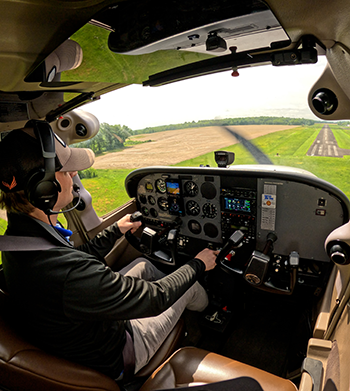 “This sounds like a simple enough question, after all we do this every day,
Apparently, the FAA doesn’t think it’s so simple. The Airplane Flying Handbook now dedicates a whole chapter to ‘Energy Management: Mastering Altitude and Airspeed Control.’ It’s a good, 15-page technical description of what pilots mostly already know: It’s a combination of pitch and power that gets us to the end of the runway at the appropriate speed and altitude.
I think this debate is no different than ‘Which came first, the chicken or the egg?’
I teach it both ways. With initial pilots, I emphasize adjust pitch for airspeed on final and adjust power to control descent toward the target. A new pilot needs proper airspeed to consistently predict where they’ll touchdown. An additional advantage of this thinking is that it works for power-on and power-off approaches. When power-off, you simply adjust the pattern flown instead of adjusting power. That’s how it’s done in gliders, by the way.
I know instructors who teach pitch versus power the opposite way with successful results. Perhaps we will hear from some of them in the comments.
As pilots get introduced to autopilots doing coupled instrument approaches, they learn that the autopilot maintains the glideslope with pitch and the pilot controls airspeed with power. In this case, the throttle does control speed. While the elevator controls altitude … sort of. More accurately, the autopilot controls rate of descent to maintain the glideslope. When I’m flying or teaching precision instrument approaches, I use the elevator to get the descent rate I want, and adjust the throttle as needed to maintain speed.
Now, before the autopilot people come for me, I should add that the more sophisticated auto flight systems include autothrottles. They will do a better job than many pilots using a combination of pitch and power. Maybe someday, future AI autopilots will enjoy that chapter in the Airplane Flying Handbook.
As we gain experience as pilots, we learn to smoothly adjust pitch, power, and trim, as needed. Thinking about this issue one way makes more sense in some situations and thinking about it differently makes sense in others. That’s fine as long as we get the job done safely.”