
Subscriber question:
"It seems like there's been a spate of turnback stall-spin crashes recently. I don't want to become another—but clearly there's a point where you can turn back. How do you prepare to make that choice in an emergency?" — Jeff D.
Not subscribed yet? Sign up here to receive tips like this every week.
Bob:
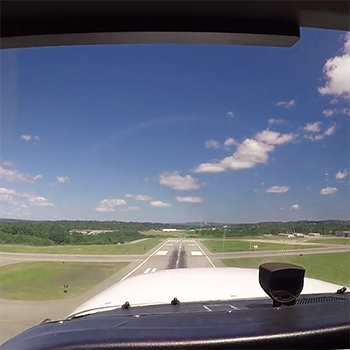 “There is an altitude at which every pilot can make it back to the airport, and I absolutely agree with that comment. But unless you know what that altitude is for your aircraft, and have validated your ability to accomplish the maneuver recently, you have no business attempting it. And it’s not a 180-degree turn back to the airport. It’s a series of turns, and you’re doing this when your heart is beating off the charts.
A big key to successful execution of engine failure on takeoff is a pre-brief on every takeoff. It only takes a second but it does prepare us mentally for the possibility of an engine failure and sets us up to make our first step the right one rather than the wrong one. So, we need to assess our best landing options on each and every takeoff and give a short 10-second briefing. ‘If I experience an engine failure on takeoff, this is what I’m going to do …’
If obstacle clearance isn’t an issue, climb out at Vy, best rate. Be aware of the safe altitude that will enable you to turn back to the airport, and monitor closely until you reach this altitude. Make your choice simple in the case of an emergency, and if it’s marginal you have no business turning back to the airport.
Statistics tell us that the tendency to turn back is overwhelming. It takes a lot of discipline to lower the nose and accept the fact that we’re going to make an off-field landing. So let’s look at that and make sure that we’re ready mentally to do just that. Because turning back to the field is all too often a fatal choice.”
Do you brief a specific altitude below which you won't turn back in case of an engine failure?