Subscriber question:
"My biggest fear of making an emergency landing is picking a place to land. Obviously, if I'm within gliding distance to an airport it's easy. If not, I have seconds to decide where to put it down and I'm in panic mode. What am I looking for if my options are limited?" - Vince P.
Not subscribed yet? Sign up here to receive tips like this every week.
Bob:
“Any clear area without hazards or obstacles will serve you well. You’re not looking for a perfect location. Far too many times, pilots compound the situation by trying to find the perfect location.
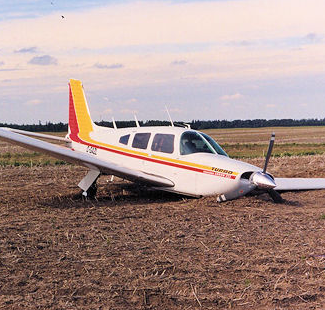 Finding a suitable field without large objects or objects that will adversely affect your landing will work very well for you. Airplanes stop pretty quickly. You know, we don’t need a 5,000-foot field, but we do need to identify what in the field may influence our landing. A big rock, a ditch or a stream across the field will adversely affect our landing because when we hit a solid object our airplane comes to a sudden stop. That’s where the injuries and fatalities do occur.
As a general rule, I strongly encourage avoiding roads due to traffic and power lines. Obviously, in certain parts of the country, this is less applicable than in others. But I have to say that our emergency does not entitle us to endanger other people. In that same vein, parking lots and golf courses where people might be present are not ideal primary choices.
Water versus trees: my personal sense is that water is not user-friendly. In most water landings, the aircraft will not stay upright, leading to injuries and an immediate survival situation. Tree landings, with the aircraft flown under control into the treetops, are very survivable; often with only minor or no injuries to occupants.”
Given a choice between a forced landing in the trees and ditching in a lake (in a fixed-gear single), which would you choose?