Subscriber question:
"What's the best way to keep emergency procedures in my head so I have them if I need them? I couldn't remember all of them when I was studying for my private, let alone now that I fly for fun and travel." — James B.
Not subscribed yet? Sign up here to receive tips like this every week.
Tom:
“Although most light airplane POHs don’t make the distinction, there are really two types of conditions addressed in the Emergency Procedures section: abnormal conditions and emergencies. Emergency conditions are those in which quick action is required, in a proper order, to protect lives and/or limit aircraft damage. Abnormal conditions are everything else…nothing that’s immediately life-threatening, but which can potentially become an emergency if not taken care of.
 Further, in true emergencies, there are usually only a small number of actions that must be performed from memory. For example, an engine failure in flight requires you to fly the airplane, aim somewhere (in case the engine won’t restart), and then if time and altitude permit, manipulate the fuel, air and ignition controls to troubleshoot the problem.
This process works in any piston-powered airplane. Individual models may have more steps (fuel pump, etc.), but the process is the same.
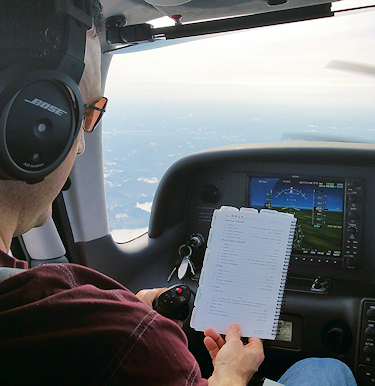
Contrast this with a failed alternator in flight. There’s no immediate threat to life or the airplane. So pull out the POH and use the checklist. No memorization necessary, and in fact, it’s better not to rely on your memory if you don’t have to.
So take out your POH and look at the Emergency Procedures section. For each checklist ask yourself if lives are immediately at stake, or if the airframe is in immediate peril. If so, pick out those items that address the threat, and commit them to memory. Practice them frequently so you know what to do if it happens. For everything else, read and practice the procedure now and then so you know where to find it and how it works, but if the condition occurs for real, follow the checklist.”
Do you practice abnormal (non-emergency) procedures, including the use of a checklist, for your aircraft?