
Subscriber question:
"What is the best way to account for runway slope? My POH has no adjustment factors for this." —Walter W.
Not subscribed yet? Sign up here to receive tips like this every week.
David:
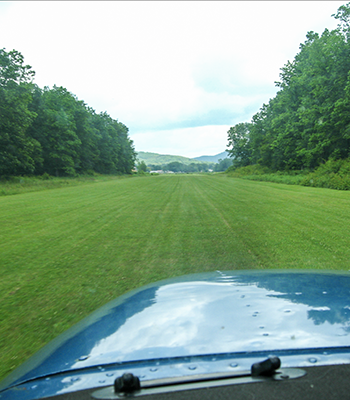 “Good question and a subject that’s seldom addressed in flight training. Departing on an upslope means some of your thrust is literally pulling the airplane uphill. Smart people have run enough sample calculations to reach a good rule of thumb for light airplanes.
Each degree of upslope increases the takeoff distance by 10% and decreases the landing distance by the same 10%. The opposite applies for downslope: Subtract 10% per degree for the takeoff distance and add 10% per degree to the landing distance.
As you can see, a few degrees of slope can make some runways unidirectional. All landings must be upslope and all takeoffs are downslope. With light winds, it’s often advantageous to accept a small tailwind for a downslope departure rather than try an upslope departure that’s into wind.
Slope also creates visual illusions on approach. A down-sloping runway makes you feel low on the approach. You’ll stay higher, which risks a last-minute pitch down when you realize you’re too high and you get the inevitable increase in airspeed, which is the last thing you want given an already lengthened landing distance. Approaching an upsloping runway makes you feel too high, possibly leading to a dangerously shallow (flat) final approach flight path.
Slope is one of those gotcha’s that can be the result of inadequate preflight planning. Don’t forget airports listed in the FAA Chart Supplement, or the Canada Flight Supplement, will normally provide runway slope in the runway information section. Being prepared will eliminate any surprises when operating from those sloped runways.”
Have you ever been suprised by runway slope? (Poor takeoff performance, long landings, weird sight picture, etc.)