Subscriber question:
"Recently a tower controller cleared me to land while the airplane ahead of me was still on the runway. It appeared the airplane wouldn’t clear before I would have touched down, so I went around. But the controller said that wasn’t necessary. What’s the deal?" — Addie R.
Not subscribed yet? Sign up here to receive tips like this every week.
Bruce:
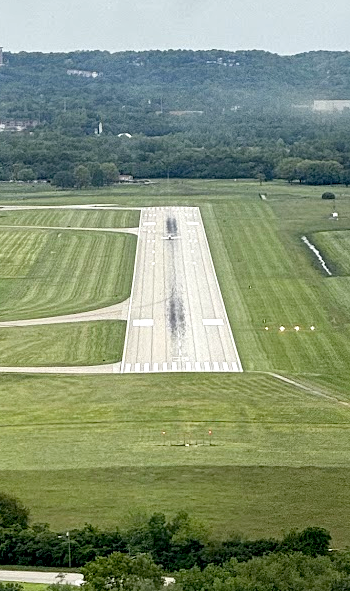 “Controllers are, in general, allowed to clear you to land when another aircraft might still be on the runway by the time you touch down. This situation is described in section 3−10−3. Same Runway Separation of Air Traffic Control, the official ATC handbook.
The basic rule is that if you’re flying a light prop aircraft and will be at least 3000 feet behind the aircraft ahead when you cross the threshold, the controller can clear you to land. The lead aircraft must be moving toward an exit with nothing blocking its path off the runway.
This option applies only during daylight and when two light single-engine or twin-engine airplanes (or helicopters) are involved. If a light twin is landing behind a single, the minimum separation increases to 4500 feet. When using this guidance to issue a landing clearance, controllers may advise you that adequate spacing exists, but they aren’t required to do so.
These runway separation standards are part of a general ATC technique called “anticipated separation.” As the AIM explains, “An aircraft is considered clear of the runway when all parts of the aircraft are past the runway edge and there are no restrictions to its continued movement beyond the runway holding position markings.” That definition also appears in the Pilot/Controller Glossary under the heading “Clear of the Runway.”
But remember you’re the PIC. You always have the option to go-around, even when the runway is clear. Controllers must ensure that a go-around won’t cause a conflict. And you can always say “Unable” if you’re uncomfortable complying with any ATC instruction, such as landing behind another aircraft, flying a short approach, or exiting the runway at a specific turnoff.”
Are you comfortable landing behind another aircraft?