
Subscriber question:
"My instructor insisted I always put the cowl plug strap over the prop. Is it really that important?" — Marcus A.
Not subscribed yet? Sign up here to receive tips like this every week.
Paul:
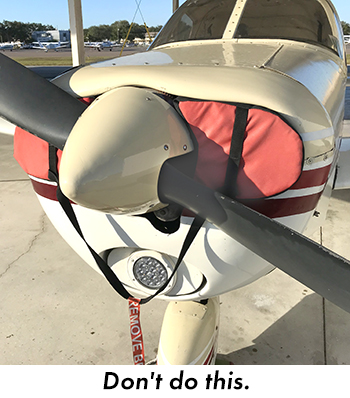 “Yeah, it’s that important. Cowl plugs are designed to keep out birds and chipmunks, but they do an even better job of blocking the airflow needed for engine cooling. Forgetting them can be a disaster. I know of at least one Diamond DA-40 that got a toasted and totaled engine from this oversight. The NTSB database has a fatal Beech Baron accident caused by overlooked cowl plugs and also a handful of non-fatals.
Cowl plugs left in place might not be obvious on the ground where idle power or a quick run-up won’t produce enough heat to notice anything amiss. But at full climb power, the engine can heat quickly enough to seize.
The fix is easy: Loop the strap over one prop blade. If you forget to remove the plugs, the first spin of the prop will fling them clear. Yeah, it’s death by embarrassment when you shut down to retrieve the plugs, but that’s better than the other kind of death. For this reason, avoid using plugs without a strap.
And while you’re over there grabbing your plugs, step back and take a final look at the entire airplane from a distance for anything else you might have forgotten, or that’s blocking your taxi. You don’t want to be that guy taxiing out with a plastic owl still perched on top of the tail.”
If you’d like to see this procedure in action, check out the video version of this tip.
Do you have preflight or postflight safety habits that aren't on the typical checklist?