Subscriber question:
“I was departing behind an airline jet and ATC simply said, ‘Caution wake turbulence.’ Don’t they have to ensure enough time that there’s no serious risk?” — Colin B.
Not subscribed yet? Sign up here to receive tips like this every week.
John Krug:
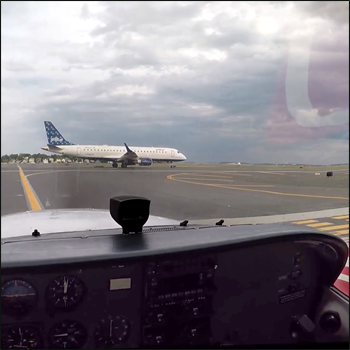 “It depends on the aircraft involved and their relative positions.
A two-minute interval is provided when an aircraft under 12,500 pounds departs behind a heavy jet. That interval becomes three minutes if the small aircraft is departing from an intersection, rather than the same threshold as the heavy aircraft.
But ‘heavy’ might not mean what you think. For wake turbulence purposes, ‘heavy’ refers to aircraft weighing more than 300,000 pounds and includes B757s. That excludes the vast majority of aircraft you’ll ever find yourself behind in a light aircraft, including most airliners. If you’re taking off behind a 737 in your Cessna 150, ATC is only required to provide a cautionary advisory for wake turbulence.
You can request additional separation for wake turbulence any time you feel that you need it. This request should be made as soon as practicable on the ground control frequency and at least before taxing on the runway. You may also request an early turn to avoid flying in the path of the departure.
The bottom line is that even though ATC is required to provide minimum wake turbulence separation, they are just that — minimums. If you feel uncomfortable, speak up and request what you need.”
Have you ever been surprised by unexpected wake turbulence?
(If "yes," please tell us about it below.)