
GPS Manuals
Clear, Step-by-Step Instructions Make It Easy!
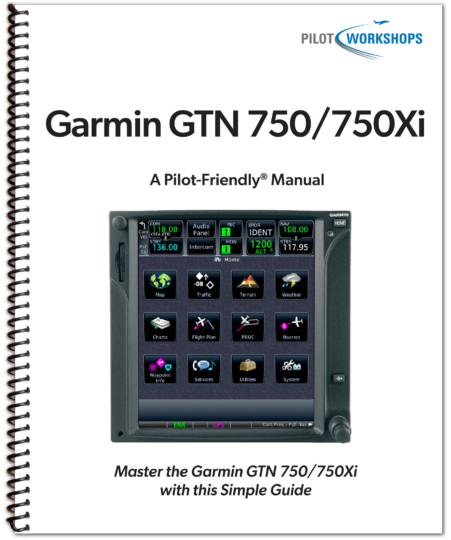
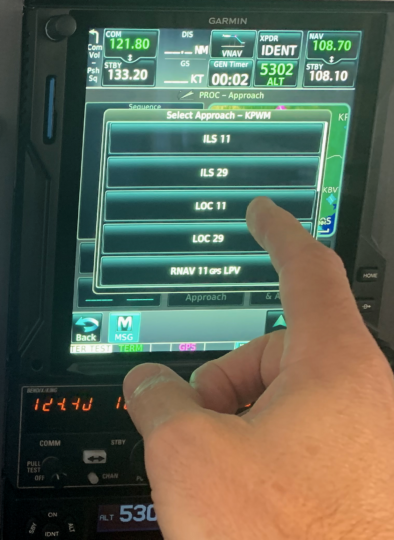
Our family of “Pilot Friendly” GPS manuals are NOT just rewrites of the manufacturer’s manuals. They provide a task-oriented format that focuses on procedures, not “buttonology”.
The table-of-contents lists the procedures the GPS unit can perform. Go to that page and the steps are listed 1, 2, 3, … to complete that task. Simple, fast and effective.
-
Task-oriented format with step-by-step instructions
-
Fully illustrated with simple diagrams
-
Digital manuals are easy to read on an iPad; keep them in your EFB app for quick access
- Optional spiral bound printed manuals for easy use in the cockpit
We have manuals for Garmin GTN and GNS series navigators, as well as G1000.
See the complete list of available manuals at the bottom of this page.
How Well Do You Really Know Your GPS?
The user manuals available from GPS manufacturers are not designed with training in mind. They tell you what each button does, but not necessarily the best sequence to accomplish a specific task.
It’s important to understand the different situations that can come up at any time in the cockpit—especially when flying IFR. You need to know the capabilities of your GPS and how to get exactly what you need, quickly, when you need it. Whether it’s a straightforward procedure or something unexpected — you need to be ready to go, and not fumbling with your equipment.
That’s where these manuals come in. They provide a simple task-based format for learning GPS. Each function is broken down into individual steps that guide you through the different ways you can accomplish a task or procedure in your GPS. It’s as simple as following the steps, and before you know it you’ll be using your GPS to its full capabilities.
Written by Experienced Pilots
Our GPS manuals are written by a team of highly accomplished CFIs, with decades of experience teaching pilots to fly with advanced avionics.
These CFIs know how pilots use GPS units in real-world situations and organize them with this in mind. They bring a practical usability and efficiency to each manual.
We regularly talk with customers who have purchased these manuals and have implemented many suggestions over the years to improve them.
Doesn’t it make sense to learn from experienced pilots who have spent thousands of hours studying and organizing GPS operations into a simple manual?
Two Options: Digital or Printed
You can order a digital (PDF) version and download it onto your iPad or computer. Or if you prefer, you can get a spiral-bound printed copy along with the digital manual and we’ll include free shipping (USA orders).
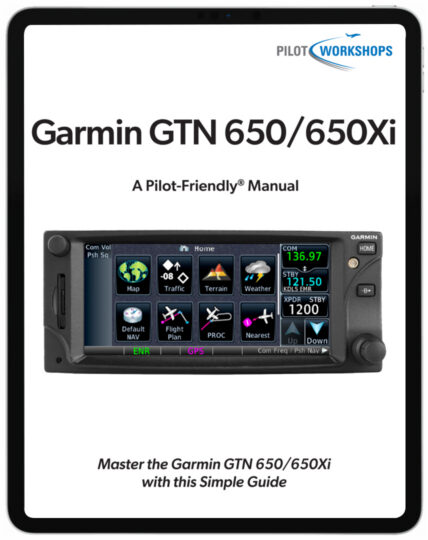
Digital (PDF)
– Quick and easy download
– Looks great on an iPad
Digital (PDF) + Printed Manual
– Add a printed manual (free shipping in USA)
– You’ll also get the digital PDF version
See the complete list of available manuals at the bottom of this page.
“The manuals we looked at were well written and broken up in a fashion that made sense for a pilot using the particular GPS. Most terms were clearly defined, something we appreciate. Because they are written in a how-to, or task-oriented style, we thought they were easier to use than the manufacturer’s manuals…”
Frequently Asked Questions
Q: Which devices does the digital manual work with?
A: The digital manual is delivered in PDF format and works on any computer or mobile device.
Q. Can I load the digital manual onto my iPad?
A. Yes, the digital PDF is formatted for use on your iPad and can be downloaded in a few easy steps.
Q. What is the format of the printed manual?
A. The printed manual is 8.5 x 11 inches, so it will fit in most flight bags or in the seat pocket of your airplane. It’s printed on high quality, durable paper. We take the extra step of adding a spiral binder so it’s easier to open and use in the cockpit, and we top it with a clear plastic cover to protect it from weather and spills.
Q. How long does it take to receive a printed manual?
A. We use the US Postal Service to mail all USA orders and they typically arrive within 5 business days. International orders usually arrive within 10 business days (can be longer in some countries). If you order the printed manual, you’ll also get the digital version which you can download and start using right away.
These Manuals Are In Stock — Order Today
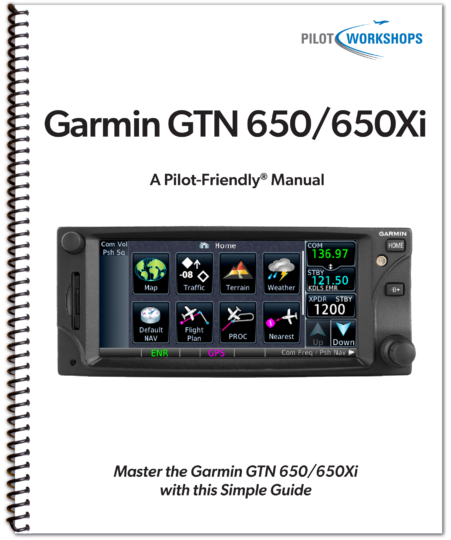
Garmin GTN 650
Includes Xi release
50 pages (full color)
Table of Contents
GTN 650 Sample 1
GTN 650 Sample 2
Free Shipping in USA
Garmin GTN 750
Includes Xi release
52 pages (full color)
Table of Contents
GTN 750 Sample 1
GTN 750 Sample 2
Free Shipping in USA

Garmin GNS 530/430
530/430 now combined into a single manual (WAAS versions)
138 pages (black & white)
Table of Contents
GNS 530W Sample
GNS 430W Sample
Free Shipping in USA
Wondering about our G1000 manual? We’ve temporarily taken it offline while we make updates and improvements. It will be added back to our store once those updates are complete.

90 Day Money-Back Guarantee!
If you aren’t completely satisfied we’ll give you a full refund. No questions asked!
PilotWorkshops.com has been an A+ rated member of the Better Business Bureau since 2006.